-d97aae2.jpg)
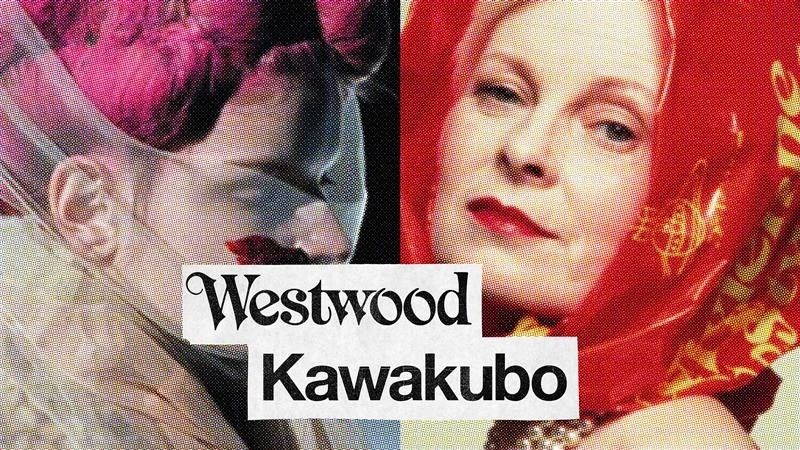
Westwood | Kawakubo
The National Gallery of Victoria’s latest fashion showcase shines a light on the iconic visionaries Vivienne Westwood and Rei Kawakubo; both trendsetters in their own right.
At exhibit Westwood | Kawakubo, the NGV doesn’t just hang clothes on mannequins and call it a day – it stages a confrontation. Bringing together the works of Westwood and Kawakubo, the exhibition feels less like a retrospective and more like a dialogue between two designers who never asked for permission, and frankly never needed it. Both emerged in the 1970s as self-taught disruptors; rejecting the rules of fashion and instead using clothing as a tool to question beauty, gender and power.
From the moment you step inside, the exhibit leans into that tension. Westwood’s legacy is loud, punk, political, and defiant. Kawakubo’s by contrast, is quieter but no less confrontational; sculptural, abstract, and almost alien in its refusal to flatter the body. The NGV’s thematic curation – moving through ideas such as ‘Punk and Provocation’, ‘Reinvention’, and ‘The Body’ – lets these differences collide in a way that feels deliberate rather than forced.
Westwood’s pieces revel in contradiction: corsetry that both restricts and empowers, alongside layering and historical silhouettes reworked with a rebellious sneer. Her work was shaped by, and helped shape London’s punk scene; taking on themes of anti-establishment, confrontation, and politics. In contrast, Kawakubo dismantles the body entirely. Her garments swell, distort, and refuse to behave, turning clothing into something closer to sculpture than fashion. At times, it’s hard to tell where the body ends and the garment begins – and that’s exactly the point.
What makes the exhibition hit is how clearly it frames both designers as rule-breakers, not just stylists. These are clothes that reject the idea of clothing itself. Kawakubo has long pursued garments that ‘did not exist before’, pushing past function into pure concept, while Westwood weaponised fashion as activism, embedding political messages directly into her work.
There’s a risk, in exhibitions like this, that the garments become static – beautiful, but untouchable relics. Westwood | Kawakubo mostly avoids that. The staging feels alive, and holds space for two designers whose work was never meant to sit quietly.
With over 100 pieces spanning decades of work, the exhibit encourages viewers to look on in discomfort at pieces that challenge traditional fashion. Ultimately, Westwood | Kawakubo isn’t about fashion – it’s about resistance. What happens when clothing stops dressing the body and starts challenging it? What does it mean to reject the expected and build something new in its place?
The exhibit is inspiring, but not in the traditional sense. Find yourself at this exhibit, and you’ll find yourself unsettled – maybe a little confronted – exactly as Westwood and Kawakubo would intend to.