
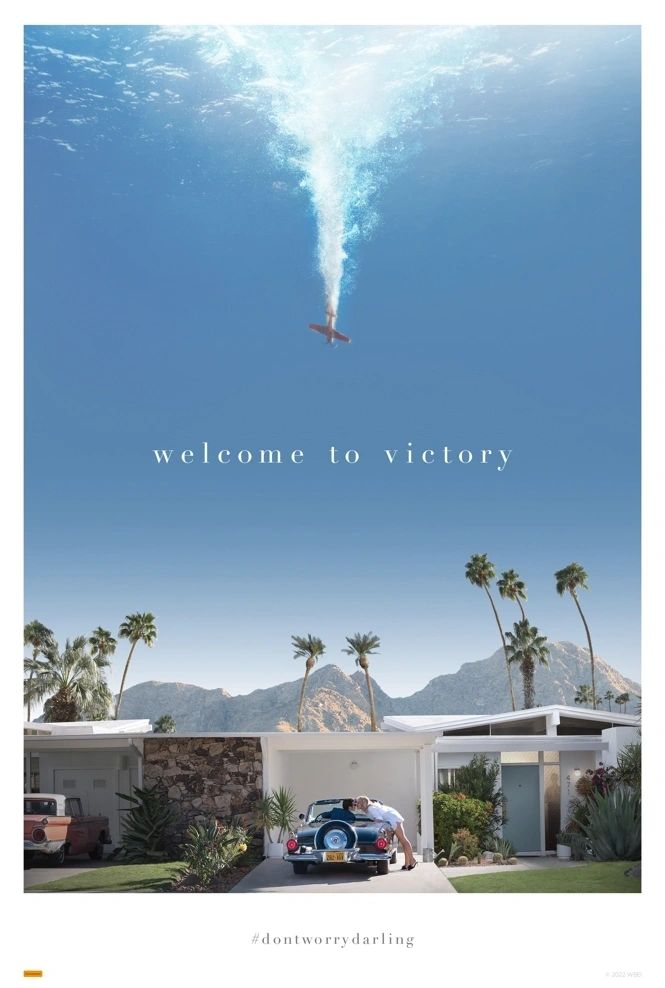

An idyllic mid-century heaven hiding a sinister secret is the setting of Olivia Wilde’s latest film, Don’t Worry Darling. As Wilde’s highly anticipated directorial follow up to her 2019 film Booksmart, the psychological thriller follows the seemingly perfect lives of young couple Alice and Jack, who are living their best lives as citizens of the Victory Project. What is essentially the Stepford Wives on crack, the film features an all-star cast, along with plenty of claustrophobia and uneasiness thrown in.
With a screenplay by Katie Silberman (Booksmart), based on a story by Carey and Shane Van Dyke, Don’t Worry Darling centres around the company town of Victory in California in the 1950s. Populated by picture-perfect couples, every husband leaves each morning to go to his job in the restricted area, while their dutiful wives stay home; working away the day until their husband returns to them, with dinner already on the table and a drink waiting for them. Lead by Victory’s founder/pseudo guru Frank, all families of Victory follow along blindly, blissful in their ignorance, until Alice starts to question the suffocating utopia she lives in.
The incredible Florence Pugh stars as main character Alice Chambers, who is married to businessman Jack, played by Harry Styles in his first leading role. The two share convincing onscreen chemistry, but it is Pugh’s talent that carries the film, while Styles’ new acting direction still leaves a lot to be desired. Playing the enigmatic Frank is Chris Pine, who leans into his creepy villain role with plenty of shit-eating grins. Equally as chilling is Gemma Chan as his wife Shelley, who keeps the other housewives in line with her calm and collected demeanour. Olivia Wilde and Nick Kroll round out the cast as the Chambers’ neighbours and close friends, Bunny and Dean, who have also bought into whatever it is Frank is selling.
Cinematically, the film is absolutely gorgeous to look at – with golden hues and soft pastels bringing the scenes to life. Every room and costume is beautifully set out, and is a vintage-lover’s dream. Until the film’s rose coloured glasses start to crack, and Alice begins to realise something is off, the film starts to incite feelings of claustrophobia, despite the vastness of the desert Victory is in the middle of. The use of windows in the film was also clever – with the general feeling being that you were always being watched by someone.
While Don’t Worry Darling isn’t the most original of films, and has its fair share of imperfections, it is still an entertaining movie. Wilde’s use of feminism and gender roles helps drive the film closer to home, making the ending just that bit more satisfying. Don’t Worry Darling hits cinemas 6 October.